
Socially Responsible Investment
Socially Responsible Investment: Aligning Finance with Sustainability
27-01-2026
The investing environment has evolved substantially in recent years as more investors try to match their financial objectives with moral principles and social responsibilities. This strategy, referred to as Socially Responsible Investment (SRI), places a strong emphasis on funding businesses and initiatives that benefit the society and the environment in addition to producing financial benefits. SRI has become a potent instrument for advancing sustainable and equitable economic growth as awareness of global issues including social injustice, climate change, and business misconduct rises.
Choosing investment alternatives based on environmental, social, and governance (ESG) factors is known as socially responsible investing. Environmental variables evaluate how a Business affects pollution prevention, climate action, and natural resources. Social aspects include consumer responsibility, diversity, community involvement, human rights, and labor practices. Corporate ethics, accountability, board structure, and transparency are all examined by governance considerations. Investors seek to promote ethical corporate practices while controlling long-term risks and guaranteeing sustainable growth by incorporating these factors into their investment choices.
The potential to generate long-term wealth is one of the main benefits of socially responsible investing. Businesses that adhere to sustainability and ethical standards are frequently better able to control risks, abide by laws, and preserve solid reputations. Because of this, these companies typically exhibit consistent success throughout time. Studies increasingly demonstrate that SRI portfolios may perform as well as, or even better than, conventional investments, especially over the long term, defying the prevalent wisdom that ethical investing reduces financial results.
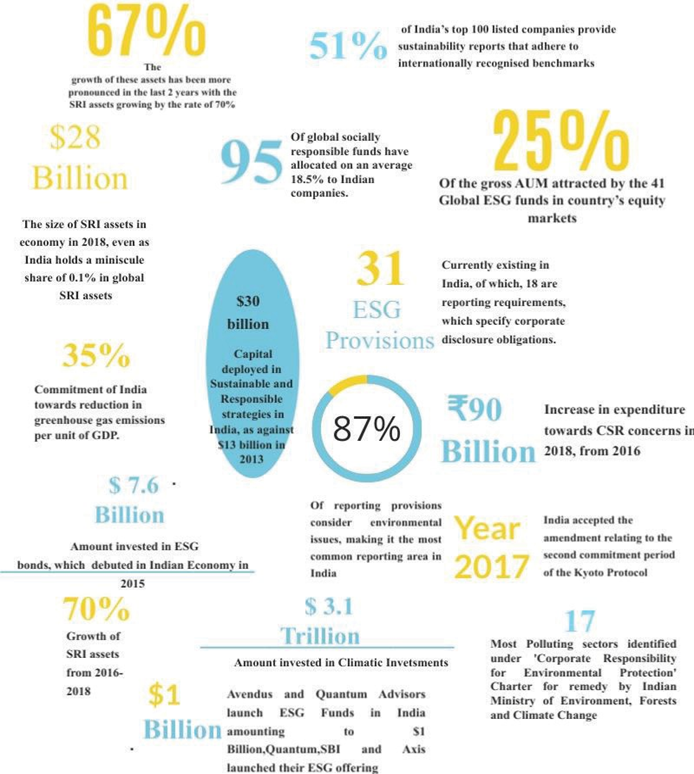
Global financial markets, governments, and institutional investors have all contributed to the expansion of SRI. ESG concepts are becoming more and more integrated into the investing strategies of mutual funds, pension funds, and insurance firms. In India, corporations are being encouraged to follow ethical standards by regulatory organizations and stock exchanges that support sustainability reporting and responsible investment practices. This change indicates a wider understanding that social responsibility and financial success are related rather than antagonistic objectives.
The lack of standardized ESG indicators, low awareness among retail investors, and worries about "greenwashing," in which businesses seem to be socially conscious, are some of the obstacles that Socially Responsible Investment must overcome despite its advantages. Strong regulatory frameworks, more transparency, and investor education are all necessary to address these issues. It is anticipated that SRI will become more credible and accessible as data quality increases and awareness grows.
In conclusion, socially responsible investing is a significant development in the financial industry where judgments about investments are influenced by both purpose and profit. In order to create a sustainable and moral financial system, students, investors, and aspiring company executives must comprehend SRI. SRI demonstrates that finance can be a force for good by promoting ethical companies and sustainable projects that boost the economy and benefit society, the environment, and future generations.
Download Broucher
Categories
1. Internet of Things2. Cybersecurity
3. AR VR
4. 5G NETWORK
5. Blockchain
6. MBA
7. MBA Blog 2
8. Instagram vs Reality
9. The Power of Vulnerability
10. Mcom Blog
11. Learning Beyond the Classroom: My Internship at KMF
12. Green Chemistry
13.Beyond the Lab Coat
14. From Panini, ChandraGupta To ChatGPT: India’s Journey from Wisdom to Artificial Intelligence
15. What AI may herald for literary studies? Some musings.
16. Discover Your Future with the Department of Political Science
17. Digital Assets: Transforming the Future of Finance and Ownership
18. Start-up Culture in India: Empowering Young Innovators
19. Wildlife Whispers: History of Bandipur National Park
20. Building a Strong Future: The Power of Choosing B. Com
21. MBA in the Digital & AI-Driven Business World
22. Fast Changing Dynamics of MBA Program
23. You’re Not Meant to Do College Alone: Why Connections Matter More Than You Think
.svg)