ChandraGupta To chatgpt blog
From Panini, ChandraGupta To ChatGPT: India’s Journey from Wisdom to Artificial Intelligence
03-11-2025
Meta Description:
From the hymns of the Vedas to the hum of Artificial Intelligence, India’s story has always been more than a quest for knowledge — it’s a journey to understand what it means to be truly wise. From Chandragupta’s strategy to today’s digital visionaries, our pursuit of intelligence has never been just about power or progress, but about compassion, ethics, and the spirit that makes us human.
Keywords: Indian Knowledge Systems, Artificial Intelligence in India, Chandragupta Maurya, Chanakya, Ashoka, Jain philosophy, Anekantavada, Ahimsa, Vedic wisdom, ethics in AI, Panini Sanskrit grammar, ancient Indian science, Digital Dharma, Surana College, Indian philosophy and technology, history of AI in India, wisdom and intelligence, Mauryan Empire, Indian education and innovation
The Spark of Intelligence: How It All Began
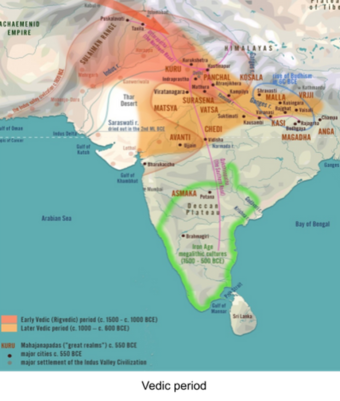
Long before machines could think, India was already asking the timeless question: What does it mean to be intelligent?
In the Vedic period, knowledge wasn’t about collecting facts or mastering tools — it was about awareness, or Medha, the inner light that helped one see truth, balance, and harmony in all things. For the ancient sages, intelligence was never separated from goodness; it was the bridge between reason and responsibility, between science and spirituality.
And in our modern world of Artificial Intelligence, that balance — between logic and humanity — feels more vital than ever.
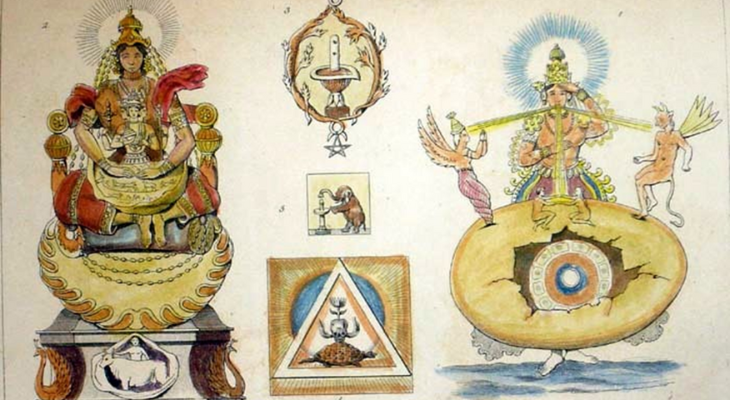
Prajapati, a Vedic deity who presides over procreation and protection of life,
The Second Urbanisation: When Ideas Built Cities
By around 600 BCE, India was alive with transformation.
New cities like Vaishali, Pataliputra, and Ujjain were buzzing with traders, artists, and thinkers. But this wasn’t just the rise of cities — it was the rise of ideas.
This period, known as the Second Urbanisation, saw people dream, question, and redefine what it meant to live together. Streets echoed with debate, workshops glowed with creativity, and minds shimmered with curiosity — as India began shaping not only its cities, but its soul.
Among its greatest minds was Chanakya, the teacher who guided Chandragupta Maurya. His Arthashastra wasn’t merely a treatise on politics — it was one of the world’s earliest studies in systems thinking and governance. Chanakya observed patterns, studied behaviour, and created an administrative model that worked like a living, learning organism — practical, intelligent, and deeply human.
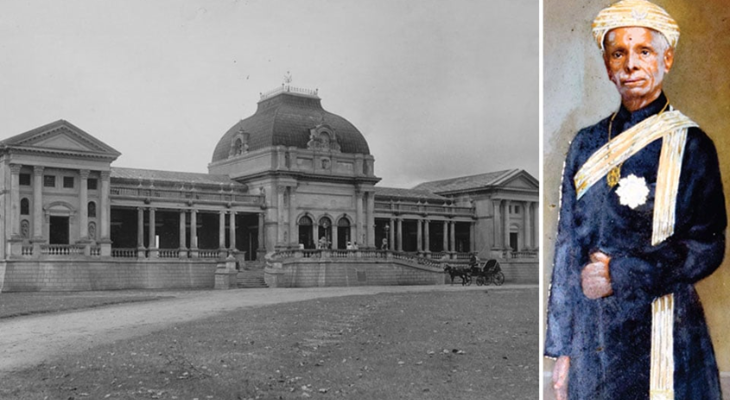
Photo of Dr. R. Shamasastry Mahamahopadyaya of Mysuru who discovered the lost treatise Arthashastra.
In his later years, Chandragupta Maurya began to seek peace beyond power. Haunted by dreams and burdened by the weight of material life, he turned to his spiritual mentor, Jain monk Bhadrabahu.
The wise monk saw those dreams not as fear, but as foresight — signs of an approaching twelve-year famine, and a deeper message to live with simplicity and awareness.
Choosing peace over power, Chandragupta left his throne and followed Bhadrabahu to Shravanabelagola in Karnataka. There, in quiet reflection and humble service, he spent his final days — learning that true strength lies not in conquering others, but in mastering oneself through calm, compassion, and clarity.
Bhadrabahu, the gentle teacher, left behind a truth that still echoes today: Knowledge fills the mind, but only wisdom and empathy awaken the soul.
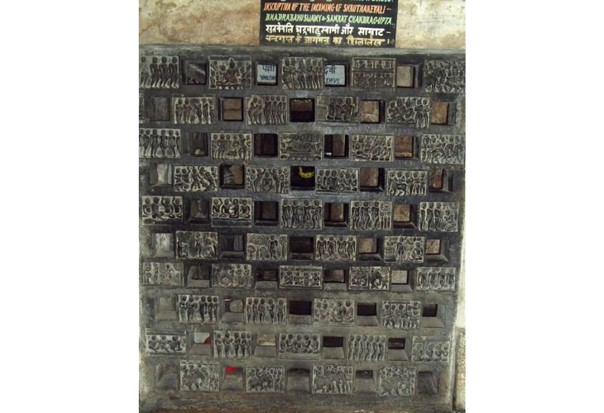
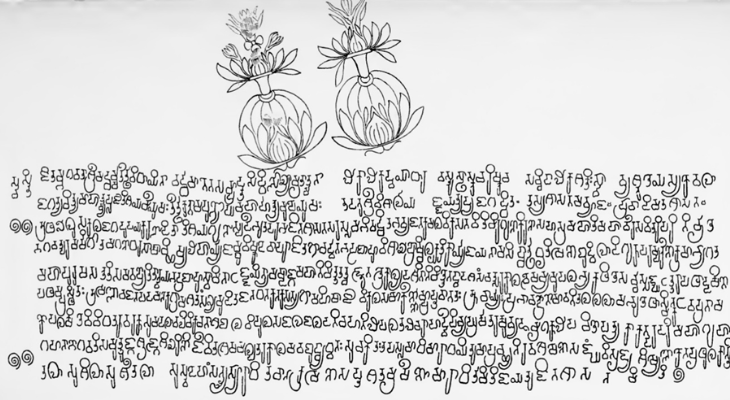
7th-century Bhadrabahu inscription at Shravanabelagola (Sanskrit, Purvahale Kannada script).

The Footprints of Chandragupta Maurya on Chandragiri Hill, where Chandragupta (the unifier of India and founder of the Maurya Dynasty) performed Sallekhana.
The Gentle Intellect of Jainism
While empires expanded knowledge, Jain thinkers expanded understanding.
They offered a perspective the modern world still needs — that truth has many sides.
This idea, called Anek?ntav?da, reminds us that no single viewpoint can hold the entire truth. In many ways, that’s how Artificial Intelligence learns too — by processing countless perspectives to find balance.
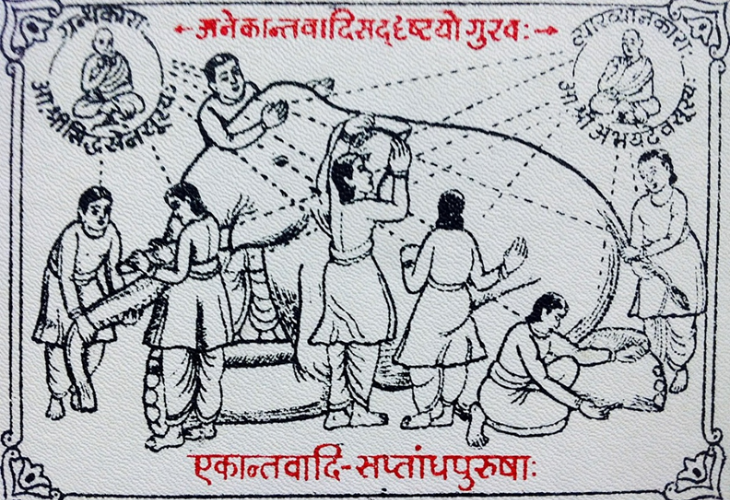
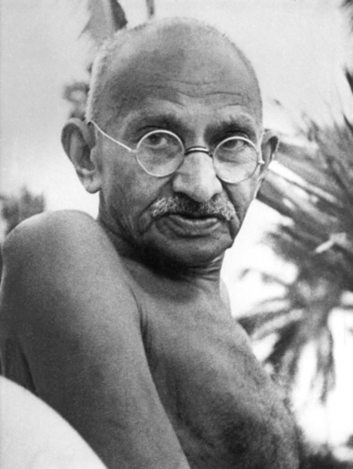
Seven blind men and an elephant parable. Mahatma Gandhi used the Jain concept of Anekantavada to explain his views.
But Jainism added what machines still lack — Ahimsa, the compassion that refuses to harm.
It was, in many ways, India’s first ethical code for intelligence:
“Use knowledge not to dominate, but to understand.”
Chandragupta and Ashoka: From Strategy to Conscience
When Chandragupta Maurya united India, knowledge became power.
When his grandson Ashoka saw the sorrow of war, knowledge became conscience.
Ashoka turned from conquest to compassion — carving his message of peace and empathy into stone pillars across the land. These inscriptions became the world’s first public network of shared wisdom, urging people to care for nature, respect all faiths, and speak with kindness. Just two generations apart, Chandragupta and Ashoka reflected two sides of intelligence — one strategic, the other moral.
Analytical intelligence builds systems.
Moral intelligence builds souls.
Together, they remind us that true progress needs both.
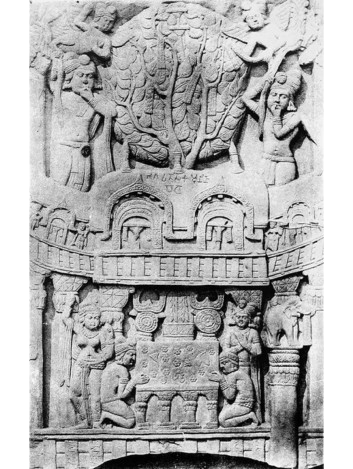
Illustration of the original Mahabodhi Temple temple built by Ashoka at Bodh Gaya. At the center, the Vajrasana, or "Enlightenment Throne of the Buddha", with its supporting columns, being the object of adoration. A Pillar of Ashoka topped by an elephant appears in the right corner. Bharhut relief, 1st century BCE.Image courtesy (Wikipedia).
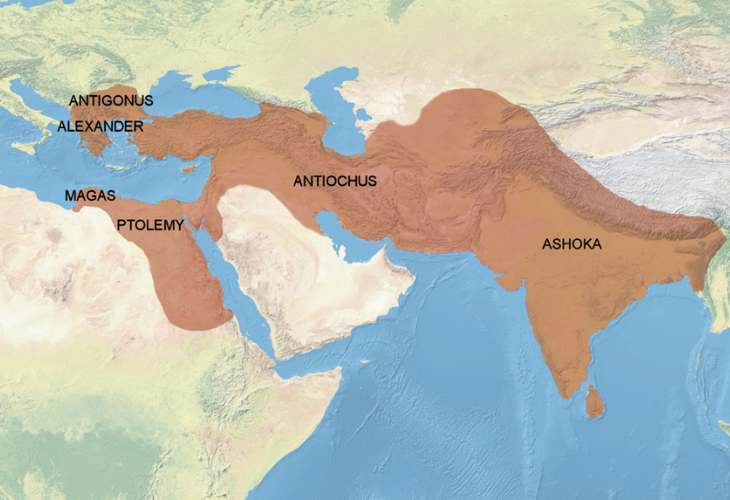
Territories "conquered by the Dhamma" according to Major Rock Edict No.13 of Ashoka (260–218 BCE).
From Panini to Programmers: The Code of Indian Genius
India’s legacy of logic and language has always evolved with time.
Over 2,000 years ago, Panini’s Ashtadhyayi described Sanskrit using precise rules and symbols — so structured that modern linguists compare it to computer code. Each verse worked like a living algorithm — elegant, logical, and creative.
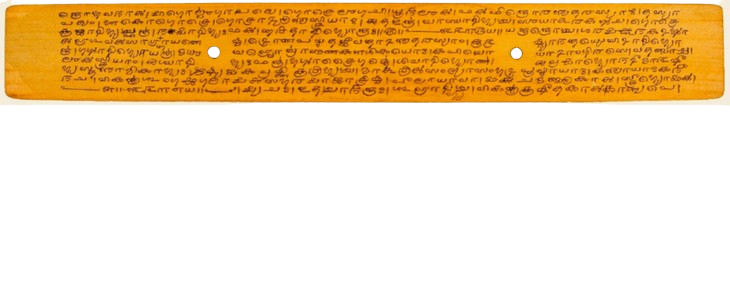
Palm-leaf page from a version of A???dhy?y? in Grantha script.Image courtesy (Wikipedia).
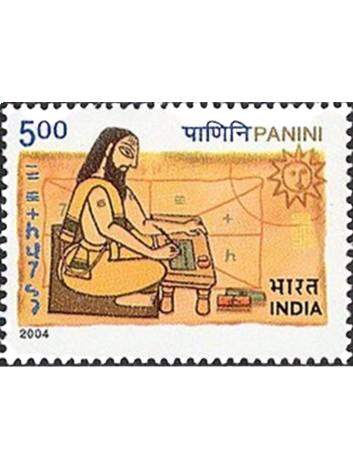
Panini’s system shaped Sanskrit across India and influenced southern scholars, especially in Karnataka.
During the Kadamba, Chalukya, and Rashtrakuta eras, Sanskrit guided administration, literature, and education — all built upon Panini’s foundations.
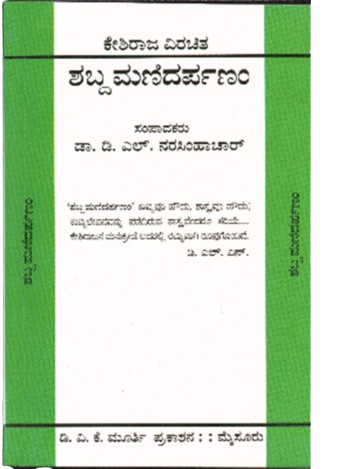
Centuries later, Kannada grammarians like Keshiraja drew upon this legacy in works like Shabdamanidarpana (13th century CE), reflecting the same analytical precision.
.png)
Photo of D L Narisimhachar and his book on Keshiraja Shabdha manidarpanum.
If today’s AI runs on digital code, Panini’s grammar was humanity’s first language engine — proving that structure and imagination can coexist beautifully.
The AI Age: Machines that Think, Minds that Feel
Fast forward to today — our devices can write, compose, and even mimic our voices.
But they still can’t feel.
They can simulate intelligence, but they can’t sense wisdom.
They can calculate choices, but they can’t comprehend compassion.
And that’s where ancient insights still guide us.
As Artificial Intelligence grows sharper, we must ask a deeper question:
What kind of intelligence do we want to create?
One that only computes — or one that cares?
The Jain vision of Anek?ntav?da, the Mauryan ethics of Dharma, and the Vedic spirit of harmony offer what AI still lacks — a soul.
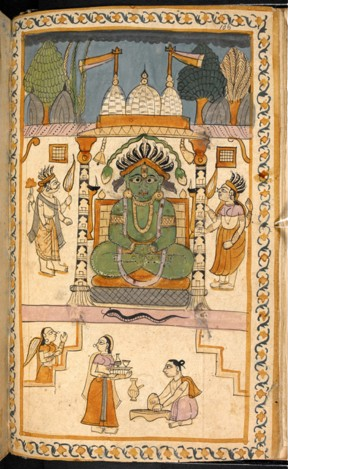
A Jina in a temple with worshippers and accessories for worship. The Sukasapati or The seventy-two tales of the parrot (British Library)Image courtesy (Wikipedia)
The Modern Classroom: Where the Past Meets the Future
At Surana Educational Institutions, this timeless spirit of learning continues.
Here, science, commerce, computer science, linguistics, and philosophy don’t stand apart — they speak to one another.
Students exploring Chandragupta’s governance, Ashoka’s ethics, or AI’s algorithms are all part of a single journey — the Indian search for an intelligence that uplifts humanity.
To nurture not just smart minds, but wise ones.
.png)
Surana campus South End
The New Urbanisation: Digital Dharma
Today, our cities are built of servers instead of stones, and our marketplaces shine on screens instead of streets.
Yet the question remains the same:
How can we use knowledge — and technology — to make life kinder, wiser, and better for all?
The answers lie within our own history.
From Chandragupta’s governance to Ashoka’s compassion, from Jain ethics to AI consciousness — India’s true strength has always been its ability to blend innovation with introspection.
The next great leap for humanity isn’t just about building smarter machines.
It’s about becoming wiser humans.
| Era / Thinker | Time Period (BCE / CE) | Region / Context | Key Contributions |
|---|---|---|---|
| Vedic Period | c. 1500–600 BCE | Northern India | The dawn of Indian thought — hymns of the Vedas spoke of Medha (inner wisdom) and Buddhi (intelligence). Knowledge was seen as awareness, not power — a harmony between science and spirit. |
| P??ini | c. 520–460 BCE | Gandhara (modern Pakistan/Afghanistan) | Authored the A???dhy?y?, the world’s most scientific grammar of Sanskrit — using precise rules like algorithms. His work inspired linguistics, logic, and even modern computational theory. |
| Second Urbanisation | c. 600–300 BCE | North & Central India | A wave of new cities — Vaishali, Ujjain, Pataliputra — where trade, art, and philosophy flourished. Ideas began to build societies as much as bricks did. |
| Chanakya (Kautilya) | c. 375–283 BCE | Takshashila / Pataliputra | Philosopher and strategist who wrote Artha??stra. He built an early “information system” for governance — turning knowledge into administration, intelligence into organisation. |
| Chandragupta Maurya | c. 340–297 BCE | Pataliputra ? Shravanabelagola (Karnataka) | Founder of the Mauryan Empire; united India; later renounced worldly life under Jain monk Bhadrabahu, seeking peace beyond power. |
| Bhadrabahu (Jain Acharya) | c. 367–298 BCE | North India ? Shravanabelagola, Karnataka | Guided Chandragupta in his final years. Preached Ahimsa (non-violence) and Anek?ntav?da (many-sided truth) — ancient lessons in ethical and plural intelligence. |
| Emperor Ashoka | c. 304–232 BCE | Mauryan Empire | Transformed from conqueror to peacebuilder. His edicts spread Dharma, compassion, and moral intelligence — the first public communication network for ethical governance. |
| Keshiraja | c. 1260–1310 CE | Karnataka | Wrote ?abdama?idarpa?a, the first great grammar of Kannada, structurally inspired by P??ini’s system. Unified language and logic in the Dravidian intellectual tradition. |
| Prof. R. Shamasastry (Mah?mahop?dhy?ya) | 1868–1944 CE | Mysuru, Karnataka | Rediscovered and translated Artha??stra (1909), reconnecting modern India to its ancient roots of governance, ethics, and information systems. |
| The Artificial Intelligence Era | 21st Century CE | Global / India at the forefront, Bangalore | Machines now analyse, learn, and simulate thought. India’s timeless insight — from Medha to Dharma reminds us that true intelligence must be ethical, compassionate, and human-centred. |
Further readings
Radhakrishnan, S. (1929). Indian Philosophy (Vol. 1). London: George Allen & Unwin.— A foundational work exploring the evolution of Indian thought from the Vedas to the age of the Mauryas, highlighting the balance between reason, ethics, and spirituality.
Jaini, P. S. (1998). The Jaina Path of Purification. Delhi: Motilal Banarsidass.— A definitive explanation of Anek?ntav?da and Ahimsa, connecting Jain philosophy to universal ideas of ethical intelligence.
Olivelle, P. (Ed. & Trans.). (2013). King, Governance, and Law in Ancient India: Kautilya’s Artha??stra. Oxford University Press.— A modern translation and analysis of Chanakya’s insights into governance, systems thinking, and human-centered leadership.
Cardona, G. (1997). P??ini: A Survey of Research. Delhi: Motilal Banarsidass.— A comprehensive study of P??ini’s linguistic genius and its influence on logic, computation, and structured knowledge systems.
Floridi, L. (2014). The Ethics of Information. Oxford University Press.— Explores how information and AI shape moral responsibility, offering a modern counterpart to India’s ancient ethical philosophies.
By Srivatsa K R
Assistant professor
Department of History
Download Broucher
Categories
1. Internet of Things2. Cybersecurity
3. AR VR
4. 5G NETWORK
5. Blockchain
6. MBA
7. MBA Blog 2
8. Instagram vs Reality
9. The Power of Vulnerability
10. Mcom Blog
11. Learning Beyond the Classroom: My Internship at KMF
12. Green Chemistry
13.Beyond the Lab Coat
14. From Panini, ChandraGupta To ChatGPT: India’s Journey from Wisdom to Artificial Intelligence
15. What AI may herald for literary studies? Some musings.
16. Discover Your Future with the Department of Political Science
17. Digital Assets: Transforming the Future of Finance and Ownership
18. Start-up Culture in India: Empowering Young Innovators
19. Wildlife Whispers: History of Bandipur National Park
20. Building a Strong Future: The Power of Choosing B. Com
21. MBA in the Digital & AI-Driven Business World
22. Fast Changing Dynamics of MBA Program
23. You’re Not Meant to Do College Alone: Why Connections Matter More Than You Think
.svg)