Gold and Silver Blog
Gold and Silver: Why Prices Rise, Fall, and Why They Matter
05-02-2026
Hemanth | 4th Semester B. Com
Gold and silver are more than just metals in India—they represent security, tradition, and family savings. Their prices swing dramatically, influenced by global forces that directly affect our wallets, from wedding jewellery to long-term investments.
Precious metals shine brightest during uncertainty. When inflation climbs, wars erupt, geopolitical tensions escalate, or economies wobble, investors flee risky assets like stocks and flock to gold and silver as safe havens. Central banks buying up on gold, expectations of lower interest rates, and a weaker US dollar further increase rallies. In India, a depreciating rupee amplifies this, making imports costlier even if global prices hold steady.
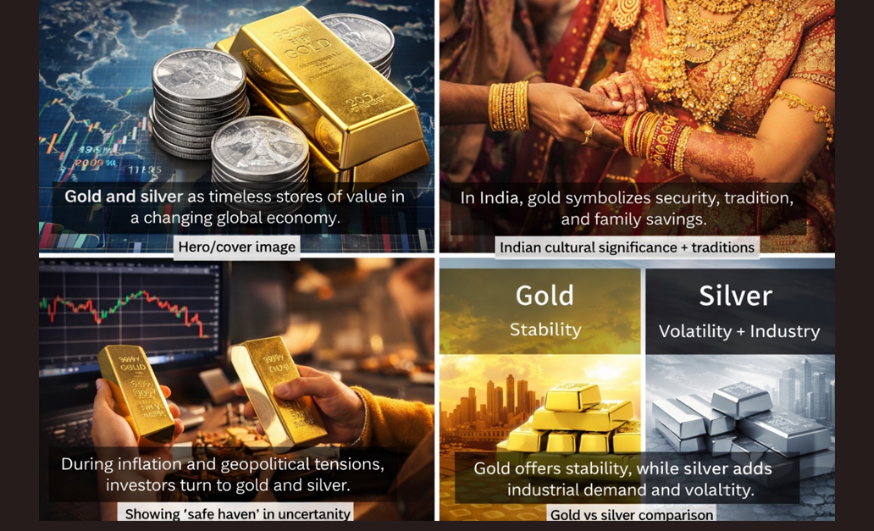
Recent examples include sharp surges tied to trade tensions, tariff threats (such as those announced under Donald Trump’s policies), and ongoing geopolitical disputes—these spark fear, driving demand and pushing prices higher.
The reverse happens when confidence returns. Strong stock markets, rising interest rates, or economic recovery pull money toward higher-yielding investments, reducing demand for non-yielding metals. Panic selling or sudden policy shifts can trigger sharp, short-term drops—or “crashes.
Silver mirrors gold as a safe haven but adds industrial demand from electronics, solar panels, electric vehicles, and more. Booming industry lifts prices faster during growth; slowdowns hit harder, making silver more volatile than gold.
Rising prices inflate jewellery costs and strain household budgets during festivals and weddings, yet reward those already holding the metals. Falls offer buying opportunities but highlight risks.
In essence, gold and silver prices reflect global uncertainty versus confidence—rising on fear, falling on calm.
Download Brochure
Download PDFAlso Read:
Follow Us
.svg)