.png)
corporate guidance blog
Corporate Governance and Ethical Practices for Sustainable Development of firm
Dr. Jagadish M. H Department of Commerce
23-01-2026
A well-structured and independent board of directors provides strategic guidance, monitors management performance and ensures that the interests of shareholders and stakeholders are well protected. Strong governance system helps in identifying and managing risks, strengthen compliance with laws and regulations and avoid fraud and manipulation. Ethical practices related to conducting business in fair, honest, and responsible manner. Together they play a crucial role in ensuring the sustainable growth of a firm.
The integration of sound corporate governance and ethical practices enables firms to achieve long-term profitability, stability, and sustainable growth in a competitive business environment. In addition to this, ethical behavior ensures fair practices in business, honest association with customers and suppliers and responsible use of resources. It also improves employee morale, customer loyalty and long-term stakeholder relationships.
Concept
In today’s dynamic and competitive business environment, firms are expected not only to achieve profitability but also to operate responsibly and sustainably. Corporate governance and ethical practices have therefore become vital components of modern business management. Corporate governance provides the framework for effective decision-making, control, and accountability within an organization, while ethical practices ensure fairness, integrity, and responsibility in business operations. Together, they help organizations balance economic objectives with social and environmental responsibilities, thereby promoting long-term sustainability and stakeholder confidence.
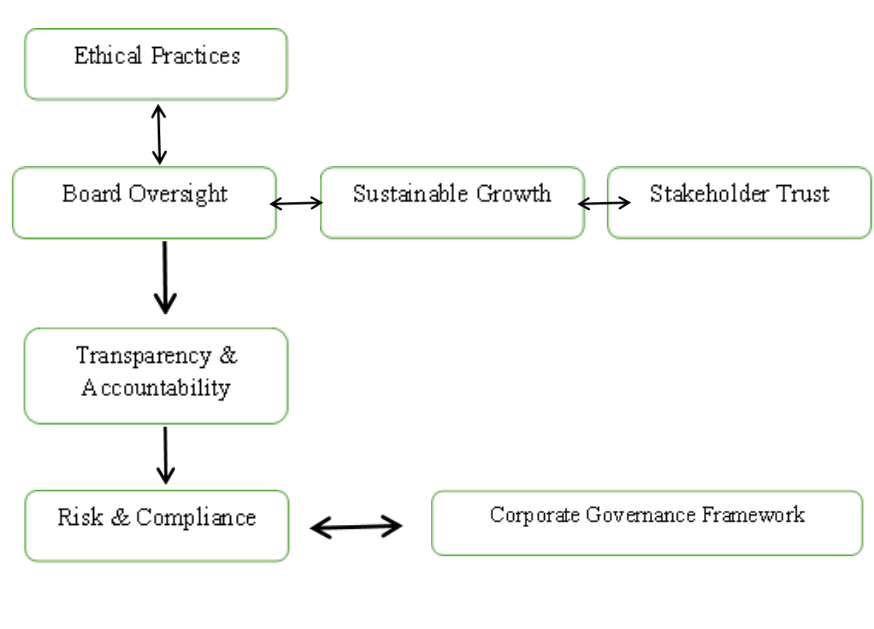
- Corporate Governance Framework This is the foundation of the system, providing rules, processes, and structures that ensure the firm is managed responsibly and efficiently.
- Transparency & Accountability Ensures clear communication, accurate reporting, and responsible decision-making, building trust among investors, regulators, and stakeholders.
- Board Oversight A competent and independent board monitors management, provides strategic guidance, and ensures that corporate policies align with stakeholder interests.
- Risk & Compliance Identifying, assessing, and mitigating operational, financial, and regulatory risks helps maintain business continuity and prevents legal or reputational issues.
- Ethical Practices Fairness, integrity, and honesty in business operations foster trust, promote a positive corporate culture, and enhance the firm’s reputation.
- Stakeholder Trust Building strong relationships with employees, customers, investors, and society ensures loyalty, cooperation, and long-term support for the firm.
Purpose
- Transparency: Clear and accurate information for stakeholders.
- Accountability: Management is answerable to shareholders.
- Fairness: Equitable treatment of all stakeholders.
- Responsibility: Compliance with laws and social norms
- Sustainability: Long-term growth and stability
Corporate Governance
- Risk Management: Identification and mitigation of risks
- Maintaining Reputation: Strengthen brand and public image.
- Ensuring Compliance: Avoid legal and regulatory issues.
- Promoting Fair Competition: Prevent unfair practices like corruption or fraud.
- Employee Morale & Productivity: Encourage respect and honesty in the workplace.
- Risk Management: Identification and mitigation of risks.
- Sustainable Practices: Promote social and environmentally responsible decisions
Observations
- Increased Stakeholder Awareness: Stakeholders, including investors, customers, and employees, are increasingly demanding transparency, accountability, and ethical conduct from companies.
- Correlation with Business Success: Companies that follow good corporate governance and ethical practices tend to have better reputations, stronger investor confidence, and sustainable growth.
- Regulatory Pressure: Stricter laws, compliance requirements, and global standards (like ESG and CSR guidelines) have made governance and ethics essential for legal and operational compliance.
- Risk Mitigation: Weak governance and unethical practices are major contributors to corporate fraud, financial scandals, and loss of public trust.
- Employee Engagement and Productivity: Ethical practices lead to higher employee satisfaction, loyalty, and productivity, creating a positive organizational culture.
Advocating features
- Strengthening Governance Frameworks: Companies should establish clear policies, roles, and responsibilities for the board and management to ensure transparency and accountability.
- Implement Ethical Codes and Training: Develop and enforce a formal code of ethics and provide regular training to employees and management on ethical decision-making.
- Enhance Stakeholder Communication: Maintain regular, transparent communication with shareholders, employees, and the public to build trust and credibility.
- Integrate ESG and CSR Initiatives: Align corporate strategies with environmental, social, and governance responsibilities to support sustainable development.
- Regular Audits and Monitoring: Conduct internal and external audits to ensure compliance with governance standards and ethical practices.
- Promoting a Culture of Accountability: Encourage ethical behavior at all levels of the organization and ensure that violations are addressed promptly and fairly.
Strong governance and ethical practices are not just regulatory requirements, they are strategic tools for building trust, reducing risk, ensuring compliance and achieving strategic sustainable growth. Companies that prioritize these aspects are better positioned to thrive in today’s competitive and socially conscious business environment.
Download Broucher
Categories
1. Internet of Things2. Cybersecurity
3. AR VR
4. 5G NETWORK
5. Blockchain
6. MBA
7. MBA Blog 2
8. Instagram vs Reality
9. The Power of Vulnerability
10. Mcom Blog
11. Learning Beyond the Classroom: My Internship at KMF
12. Green Chemistry
13.Beyond the Lab Coat
14. From Panini, ChandraGupta To ChatGPT: India’s Journey from Wisdom to Artificial Intelligence
15. What AI may herald for literary studies? Some musings.
16. Discover Your Future with the Department of Political Science
17. Digital Assets: Transforming the Future of Finance and Ownership
18. Start-up Culture in India: Empowering Young Innovators
19. Wildlife Whispers: History of Bandipur National Park
20. Building a Strong Future: The Power of Choosing B. Com
21. MBA in the Digital & AI-Driven Business World
22. Fast Changing Dynamics of MBA Program
23. You’re Not Meant to Do College Alone: Why Connections Matter More Than You Think
.svg)